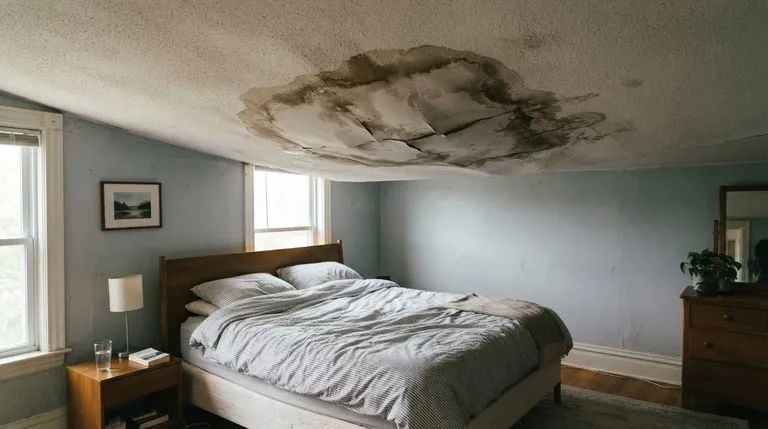
Ceiling Leak Water Damage in Round Rock, TX
Round Rock requires a permit for repair of electrical, gas, mechanical or plumbing systems, and a sagging ceiling after a leak is a safety hazard until it is checked.
Who to Call First in Round RockWhat a Ceiling Leak Usually Means
A stain or sag on a ceiling can point to water above the drywall, but the exact cause needs a qualified look — it could be the roof, plumbing above the ceiling, an HVAC line, or a bathroom or laundry area upstairs. A provider or inspector should trace the source before any repair begins.
- If you are not sure whether the source is still active, ask the provider inspecting the roof, plumbing or HVAC system to confirm before repairs begin.
- If the repair may involve wiring, a light fixture or plumbing, Round Rock's Building Inspection Division (512-218-5550) can tell you whether a permit applies before work starts.
Finding the exact source is a job for whoever inspects the roof, plumbing or HVAC system above the ceiling — not something to diagnose from the stain alone.
Safety First With a Wet Ceiling
A sagging or bulging ceiling can mean the drywall is holding standing water and is at risk of collapsing. Stay out from under it, keep children and pets away from the area, and treat any light fixture or outlet near the wet spot as a hazard until it has been checked.
- Do not stand directly under a sagging or bulging section of ceiling.
- Do not touch a light fixture, fan or outlet in or near a wet ceiling area.
- If you are unsure whether it is safe to be in the room at all, wait for a provider or inspector to check the ceiling first.

When Ceiling and Drywall Repairs Need a Permit
Round Rock requires a permit for construction, installation, alteration, repair, movement, demolition or replacement of electrical, gas, mechanical or plumbing systems. If your ceiling repair touches wiring, a light fixture or plumbing, ask Building Inspection at 512-218-5550 whether a permit is required before work starts.
| Question | Where to Ask | Phone | Checked |
|---|---|---|---|
| Does my repair need a permit? | Round Rock Building Inspection Division | 512-218-5550 | September 2026 |
| Is the repair purely cosmetic? | Round Rock Building Inspection Division | 512-218-5550 | September 2026 |
| Notice before suing a builder over defective construction | Written notice by certified mail, return receipt requested, at least 60 days before filing suit (Prop. Code 27.004(a)) | N/A | September 2026 |
| Contractor's inspection window after that notice | Up to three inspections within 35 days of receiving the notice (Prop. Code 27.004(a)) | N/A | September 2026 |
Checked: September 2026. Ask Building Inspection at 512-218-5550 whether your specific repair needs a permit.
Round Rock's Building Inspection Division page describes what triggers a permit in more detail, and the full Residential Construction Liability Act is online for anyone who wants to read the notice and inspection rules directly.
Insurance and a Ceiling Claim
Whether a ceiling leak is covered often comes down to how the water got there. A sudden, accidental event — a burst supply line or an appliance failure above the ceiling — is usually covered under most standard homeowners policies. A slow roof leak or long-term plumbing seepage is usually treated differently and may be excluded.
- Sudden and accidental water discharge is usually covered, subject to your policy's terms.
- Continuous leakage or seepage over time is usually excluded from most standard policies.
- Document the ceiling damage with photos before repairs begin, for the claim file.
If you hire a public adjuster to help with the claim, their commission is capped at 10 percent of the settlement under Insurance Code §4102.104(a); the public adjuster may not charge that percentage fee if the insurer either pays or commits in writing to pay the policy limit within 72 hours after the loss is reported to the insurer. This page is general information, not insurance advice.

Mold Risk From a Ceiling Leak
A ceiling cavity that stayed wet for any length of time is a place mold can take hold, especially with insulation involved. If drying does not fully dry out the space above the ceiling, mold can return even after the drywall itself looks fine.
- FEMA guidance describes items that hold moisture as items that "can develop mold within 24 to 48 hours," which is a reason to dry the space fully, not just the visible drywall.
- A company hired for mold remediation needs a TDLR license once the project's mold covers 25 contiguous square feet or more; an owner can assess or remediate their own residential property with fewer than 10 dwelling units without one.
For licensing rules, the mold remediation certificate, and what insurance is likely to cover, see our mold after water damage guide for Round Rock.
New Construction and the Residential Construction Liability Act
If a ceiling leak traces back to a recent build or remodel, Texas' Residential Construction Liability Act sets a required process before a homeowner can sue the contractor. Skipping it can affect the claim later, so check the timeline before you act.
- Send written notice to the contractor by certified mail, return receipt requested, at least 60 days before filing suit, under Property Code §27.004(a).
- The contractor then has 35 days after receiving that notice to inspect the property, up to three times, under the same section.
- Keep photos, moisture readings, invoices, permits and any correspondence with the builder.

If That Did Not Work
If the ceiling leak keeps coming back, or you cannot get a straight answer about the permit or the source, you have a few paths forward. There is no fixed timeline for any of these options.
- Call Round Rock Building Inspection again at 512-218-5550 and ask specifically whether your repair needs a permit.
- Ask a second provider to re-trace the leak source if the first repair did not stop it.
- For the emergency contacts behind the leak itself — a plumbing or roof failure that is still active — see who to call first for water damage in Round Rock.
For the first steps to take the moment you notice water coming through a ceiling, start with our Round Rock water damage overview, or reach us through our contact page with a question about this guide.
Frequently Asked Questions
What usually causes a ceiling leak after water damage?
When does a ceiling drywall repair in Round Rock need a permit?
Is a sagging ceiling dangerous?
Will insurance pay for ceiling repair after a leak?
What if the ceiling leak came from new construction or a recent remodel?
How does a public adjuster's fee work if I hire one for a ceiling claim?
Water in your home right now?
See who to call first in Round Rock, how to reach your water provider, and how to check your flood zone.
Who to Call First in Round Rock